
Published by DEVIA | Global Brand Editorial
Foldable Hardware Drives a Paradigm Shift in the Accessory Industry
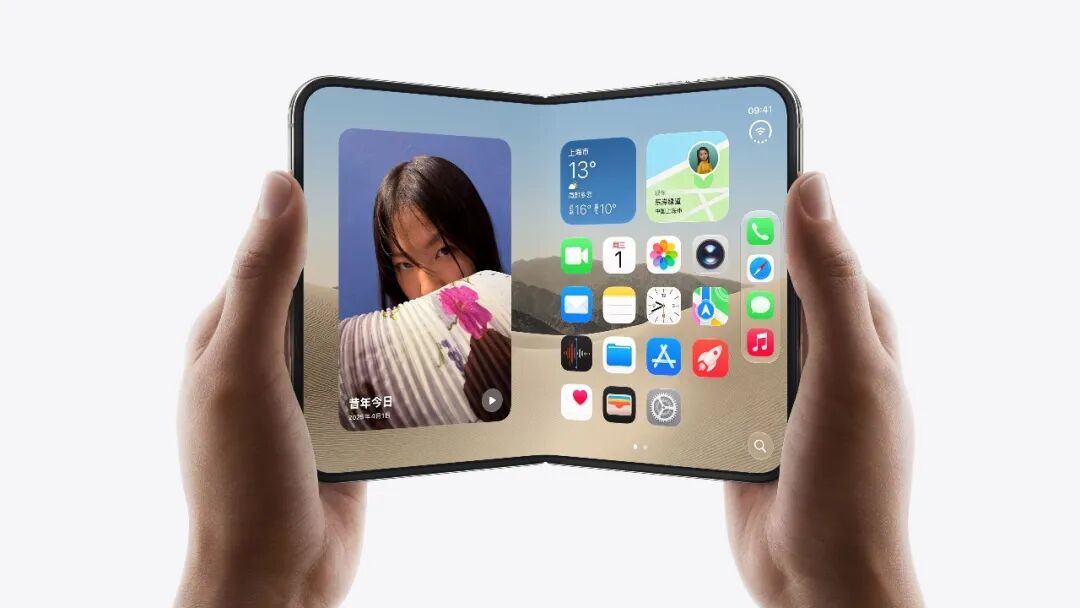
In the early hours of September 10, Beijing time, Apple's Autumn 2026 Special Event concluded with a monumental announcement: the official unveiling of the iPhone Duo, this year's ultimate dark horse. As Apple's first foldable device, the iPhone Duo shatters traditional hardware boundaries, elevating personal technology from a 'single-plane tool' to a 'dual-form, multi-scenario, dynamic interactive terminal.' This disruptive hardware evolution means that traditional accessory design logic can no longer meet the demands of this new form factor, necessitating a ground-up redesign.
Facing this new era of Apple foldables, DEVIA—the premium Apple ecosystem accessory brand—has taken the lead in revolutionizing its philosophy and product architecture. Breaking free from the superficial mindset of 'basic device adaptation and standard casing,' DEVIA anchors its strategy on dual-sided structure, all-scenarios experience, and ecosystem synergy, ushering digital accessories into a 'refined, integrated, and scenario-based dual-sided era.'
Folding Hardware Demands a Paradigm Shift in Accessory Design
Traditional slab smartphones feature fixed structures and single forms, concentrating accessory value on basic protection, exterior decoration, and standard power endurance. The industry has long relied on an iterative model of 'universal molds and minor cosmetic tweaks'—resulting in simplistic adaptation logic and severe product homogenization. In contrast, the folding design of the iPhone Duo brings comprehensive transformations across chassis architecture, hinge mechanics, unfolding states, and usage dimensions, generating entirely new pain points and use cases distinct from slab devices.
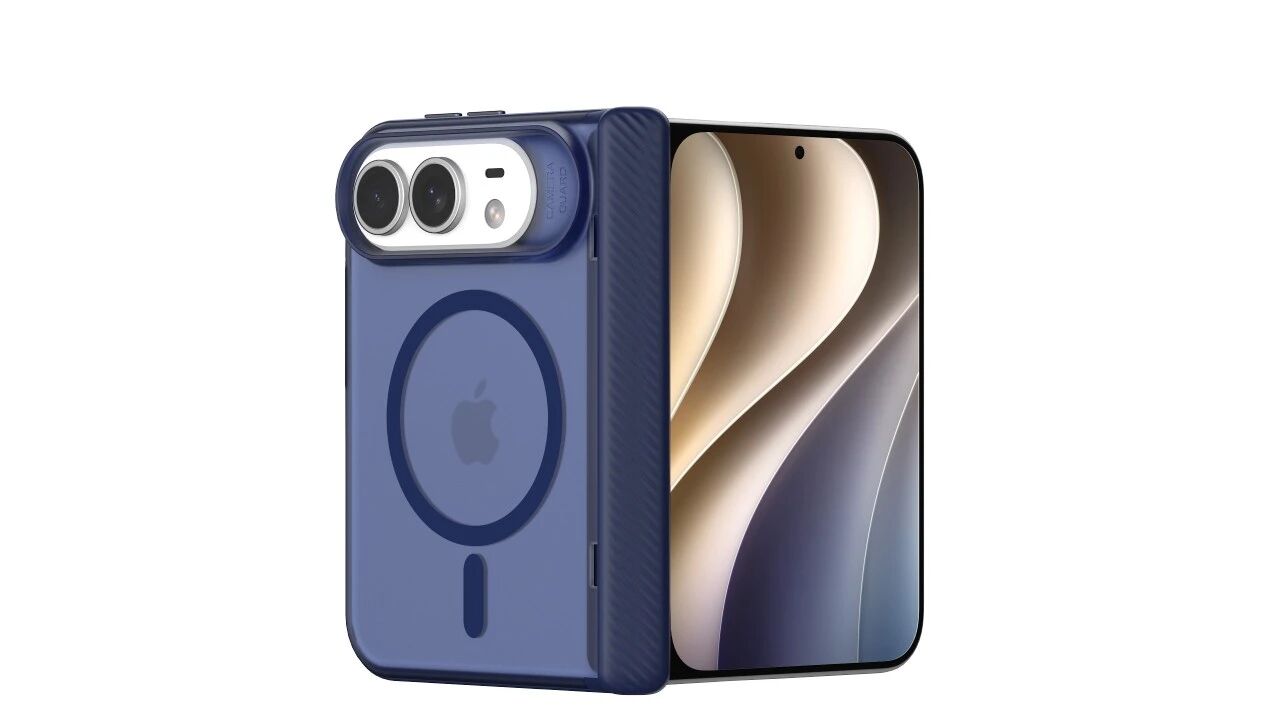
The dual inner-outer screens, dynamic hinge articulation, chassis deformation, and multi-angle hover capabilities instantly expose the flaws of traditional accessories: standard protective cases interfere with hinge movement and squeeze the folding chassis; conventional magnetic accessories suffer from alignment drift and adaptation gaps; traditional storage solutions fail to accommodate the dimensional variances between folded and unfolded states. This means that foldable phone accessories are no longer a matter of simple cutout tweaking or dimension matching, but a complete re-engineering based on an entirely new chassis structure.
DEVIA precisely discerns this fundamental industry transformation: the core of a foldable device is its 'dynamic form,' and corresponding accessories must seamlessly adapt to 'dual opening-closing states and multi-scenario dynamic switching,' discarding traditional static adaptation thinking. Drawing from the iPhone Duo's body curvature, hinge architecture, dual-screen layout, and hovering angles, DEVIA has reconstructed its foundational product design logic. Centered on dynamic adaptation, the brand resolves industry challenges such as protective interference, operational lag, limited storage, and structural mismatch, ensuring accessories truly serve the core advantages of the foldable form factor rather than constraining the hardware experience.
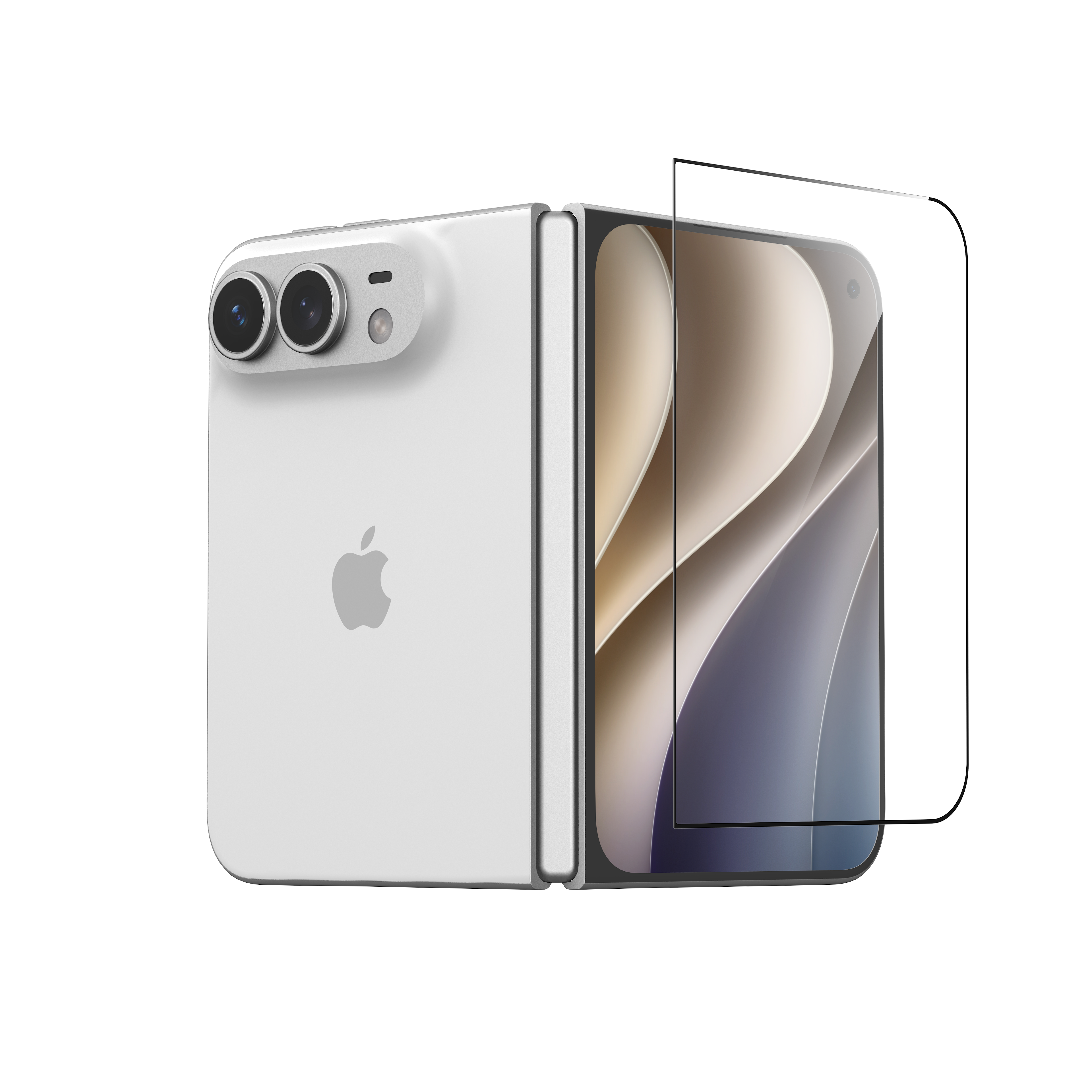
Moving Beyond Basic Adaptation: Re-engineering the Full-Chain Foldable Experience
In the slab phone era, user demands for accessories centered on 'sufficient utility, durability, and aesthetic appeal.' In the foldable dual-sided era, user expectations have advanced to 'imperceptible adaptation, all-scenario compatibility, and an immersive experience.' The premium positioning and diverse scenarios of foldable phones demand that accessories break through single-function limitations to achieve comprehensive upgrades in protection, tactile feel, charging, and magnetic attachment—core competitive advantages that distinguish DEVIA from generic market alternatives.
In terms of protection, DEVIA shatters the inherent contradiction between 'rigid full-coverage' and 'soft lightweight designs.' Targeting the iPhone Duo's intricate structure of inner/outer dual screens, precision hinges, and vulnerability to folding stress and scratches, DEVIA implements a tiered protective design that distinguishes between rigid chassis zones and flexible articulation zones. Rigid areas such as the backplate and frame are reinforced with superior drop, scratch, and fingerprint resistance; meanwhile, the hinge and folding transition areas utilize high-tenacity flexible materials to balance robust protection with smooth folding fluidity, completely eliminating hinge stutter, chassis pinching, and film-case collisions to deliver zero-dead-angle protection with unhindered articulation.
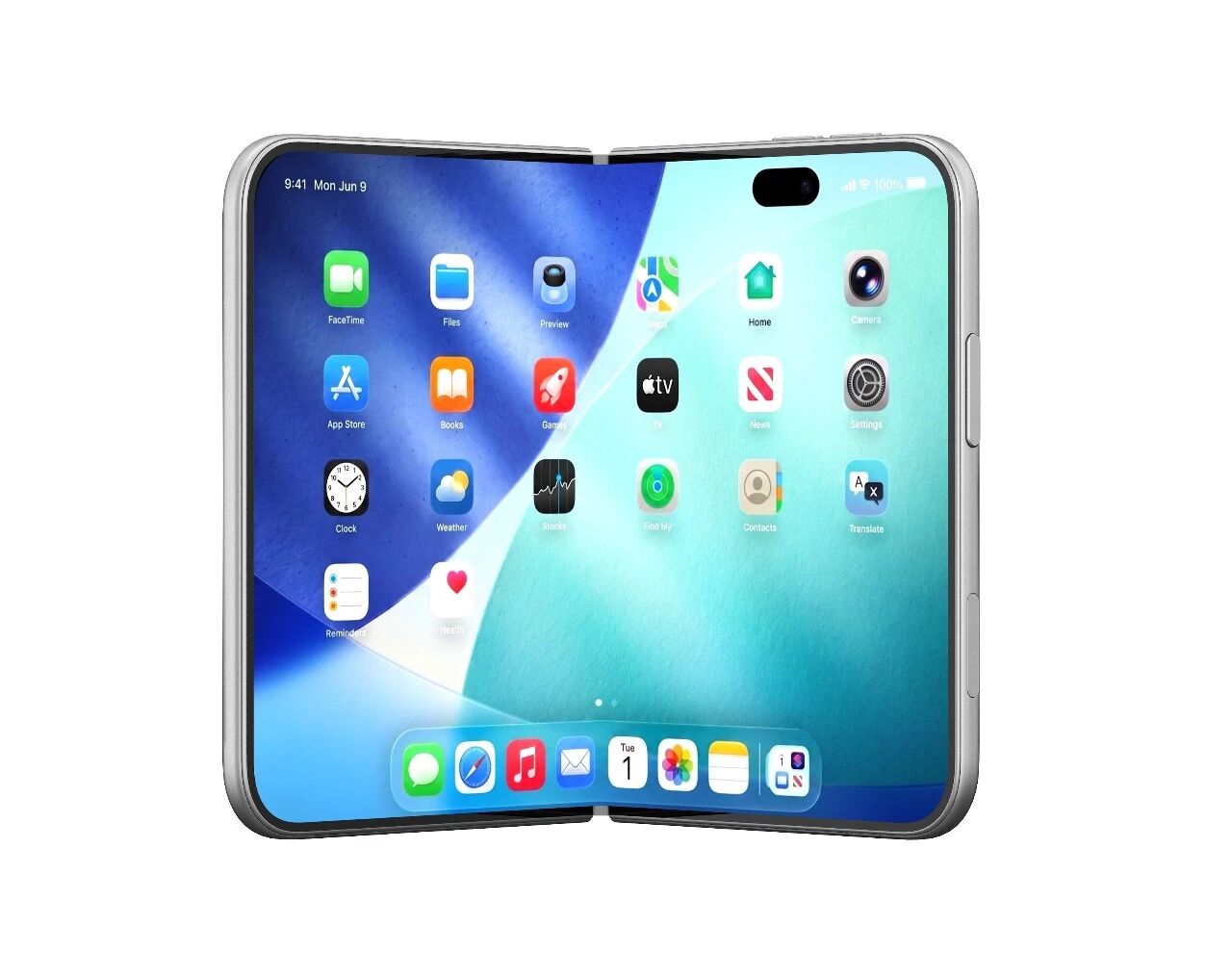
In interactive adaptation, leveraging years of deep technical mastery in the Apple ecosystem's magnetic technology, DEVIA has recalibrated magnetic arrays, magnetic strength, and bonding angles specifically for the foldable form factor. This resolves persistent pain points such as unstable adsorption, charging disconnections, and positional drift during semi-folded, hovering, or fully unfolded multi-screen states. By achieving precise adaptation across closed storage, desktop viewing, hovering office work, and full-screen operations, DEVIA integrates magnetic charging and peripheral pairing throughout every usage scenario of the foldable device.
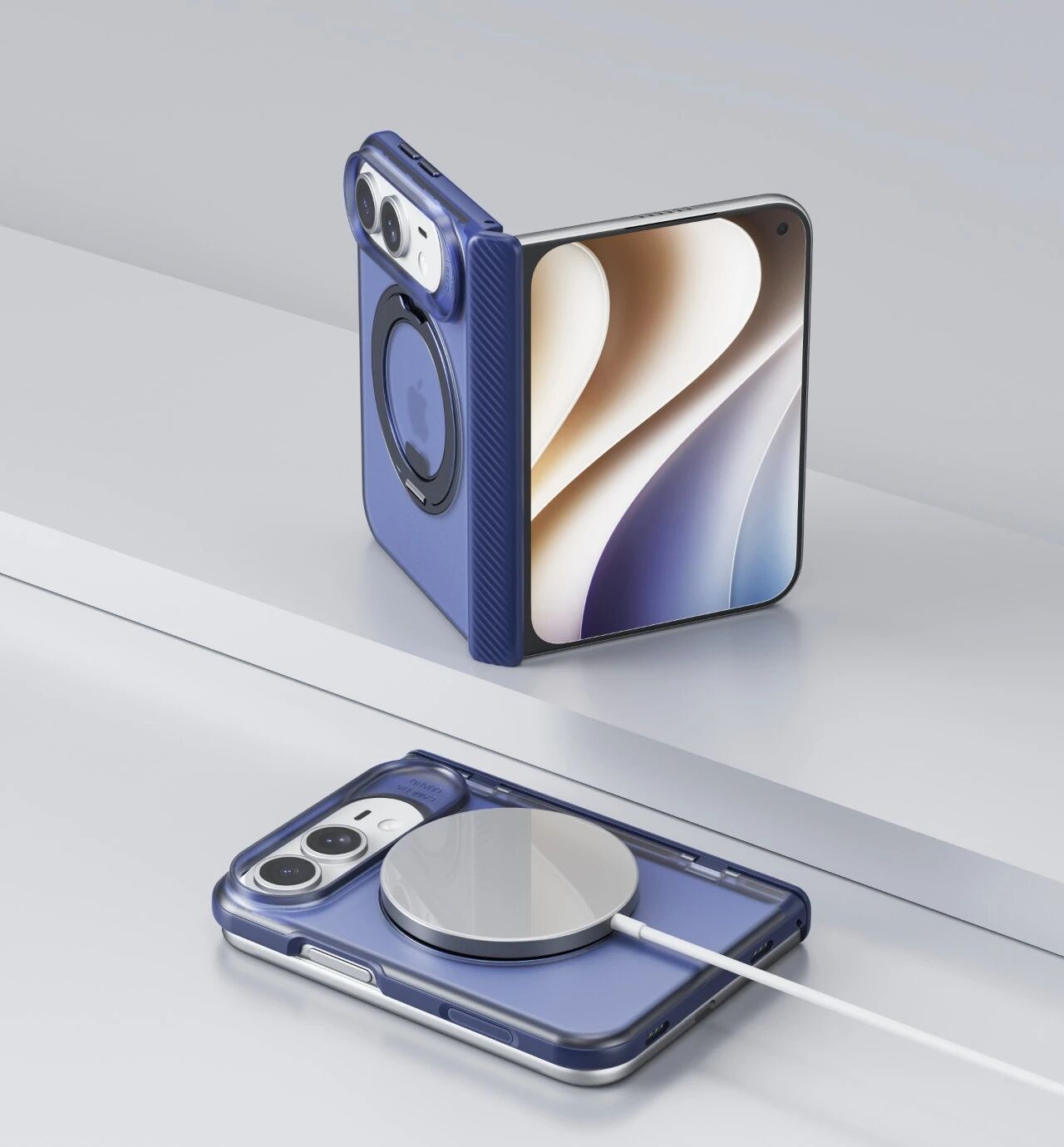
Beyond Single-Item Innovation: Building an All-Ecosystem Collaborative Experience
Most accessory brands remain confined to a fragmented, 'single-model, single-product development' model, focusing solely on individual phone upgrades while ignoring the interconnected nature of the Apple ecosystem. In contrast, DEVIA's core product philosophy revolves around the Apple all-scenario ecosystem, building a unified, coherent, and immersive end-to-end user experience.
The realization of the iPhone Duo's foldable form further bridges cross-form and cross-scenario interaction barriers across Apple devices. Collaborative multi-screen workflows and multi-device linkage among phones, tablets, watches, and headphones have become the norm. Driven by this ecosystem-first mindset, DEVIA has systematically upgraded its entire product portfolio. From foldable phone protection systems and magnetic charging ecosystems to peripheral accessories, the entire lineup maintains a unified minimalist aesthetic, premium materials, precision craftsmanship, and interactive logic.
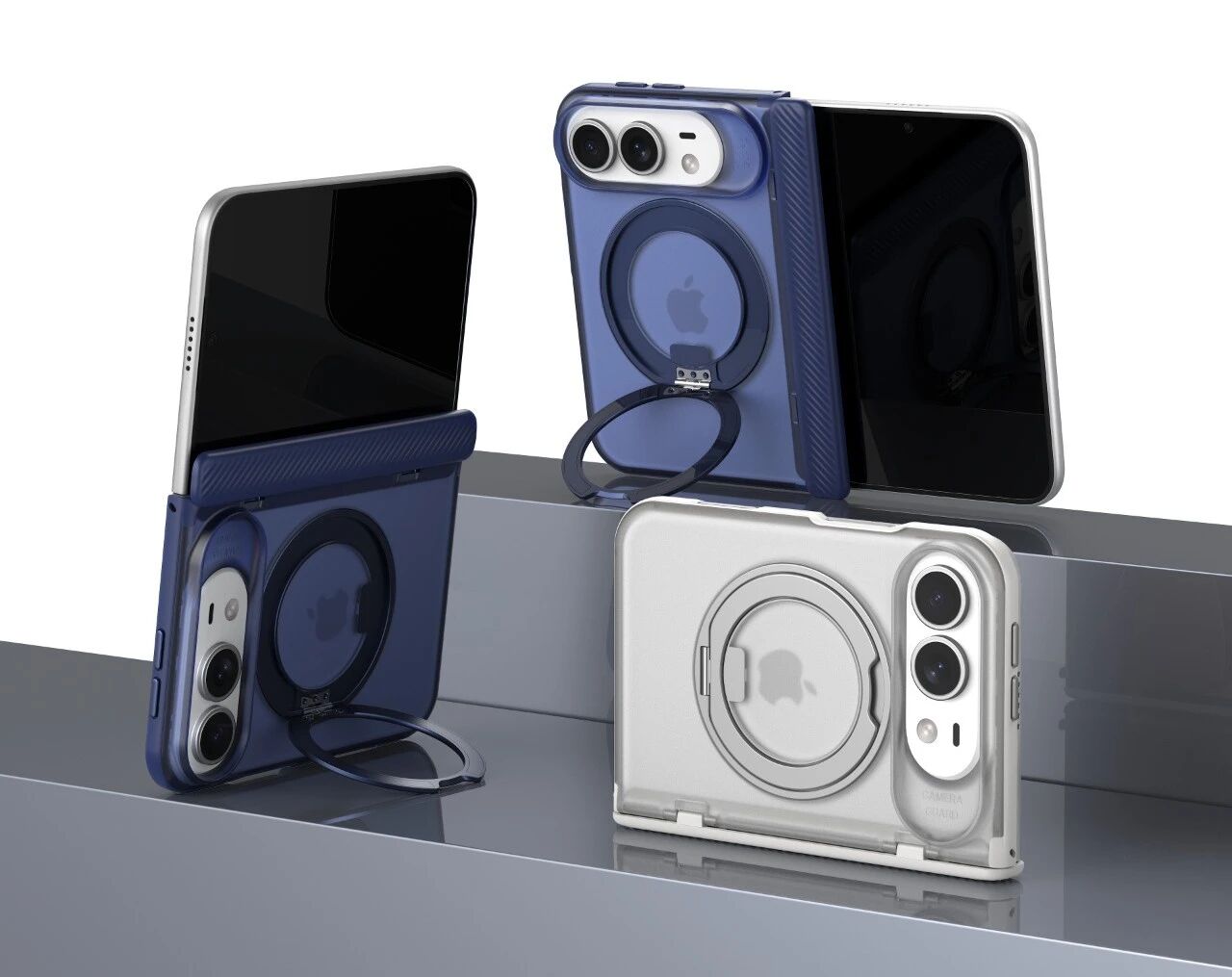
Whether in hardware texture, color palette, operational logic, protection standards, or charging efficiency, DEVIA products achieve high-level synergy with the iPhone Duo and the entire Apple ecosystem, eliminating the fragmented feel of isolated device accessories. Users switching across multiple devices and diverse scenarios enjoy a coherent, unified, and integrated premium experience, ensuring accessories truly serve the broader ecosystem rather than just a single device.
Defining the Foldable Era: Core Value Standards for Premium Accessories
The popularization of foldable phones marks a new era in digital consumption, transitioning from 'functional utility' to 'textured experience.' Consumer demand for accessories has long surpassed basic protection and power needs, advancing toward a comprehensive matrix of minimalist aesthetics, long-term durability, scenario synergy, and aesthetic unity. Past low-cost, universal, and homogenized product models are destined to exit the premium digital accessory market.
With years of deep cultivation in the high-end Apple accessories track, DEVIA steadfastly adheres to its brand philosophy of 'defining accessory standards through hardware logic, and refining product details through user scenarios.' Facing the new era of foldable dual-sided technology, DEVIA establishes four core value dimensions: Ultimate Slimness, matching the exquisite texture of the foldable body without adding burden or compromising portability; Minimalist Aesthetics, continuing the high-end digital design language to achieve visual integration between accessory, device, and ecosystem; Long-Term Durability, upgrading anti-fatigue, anti-wear, and anti-deformation material processes tailored to the high-frequency opening and closing of foldable devices; and Multi-Scenario Synergy, connecting home, office, travel, and outdoor environments so accessories adapt to the user's lifestyle rather than forcing users to compromise.
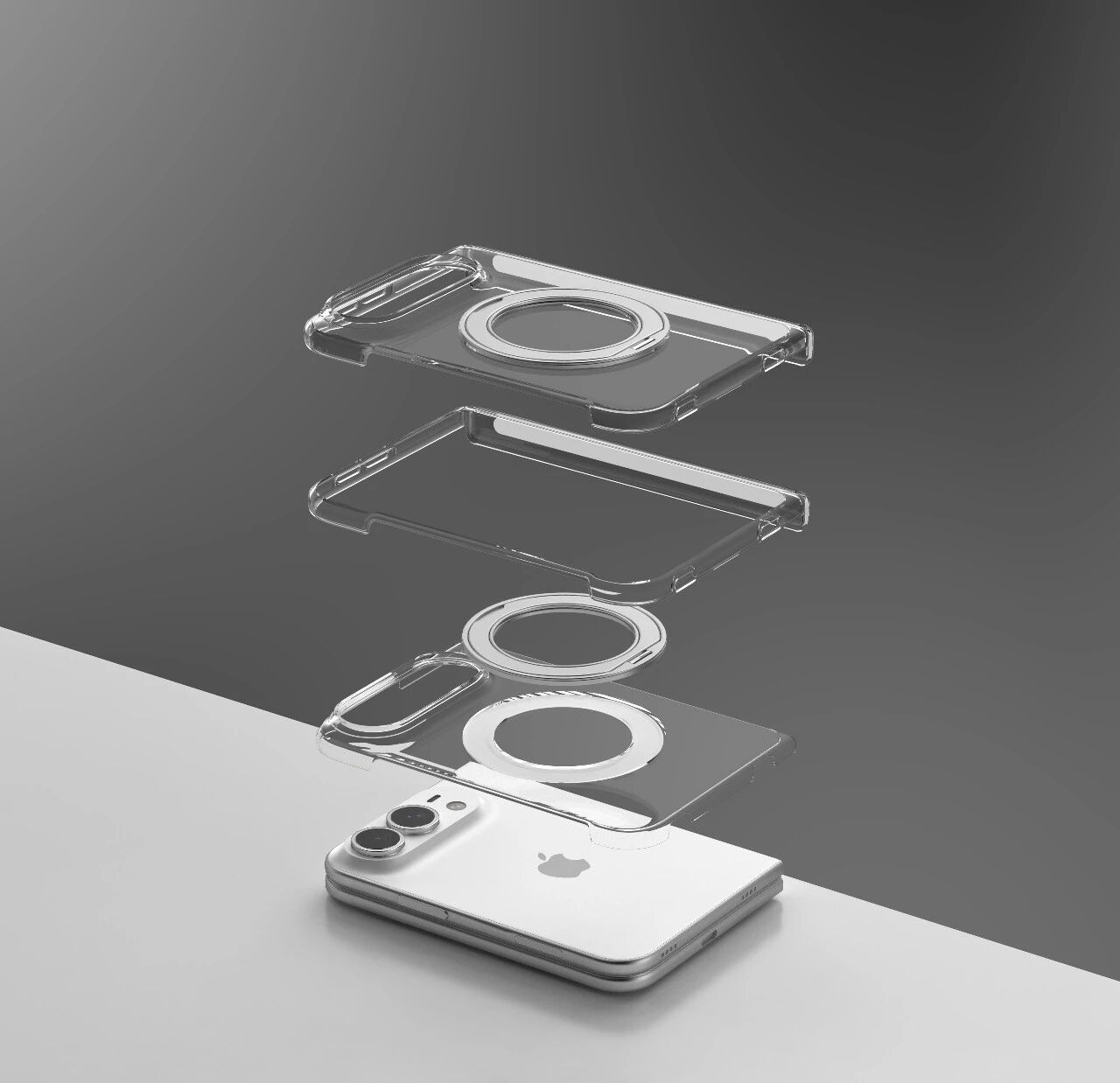
Compared to the industry's trend-chasing adaptation and homogenized cosmetic updates, DEVIA consistently leads accessory evolution with forward-looking vision. Rather than chasing short-term traffic or shallow adaptation, DEVIA deeply dissects Apple hardware design logic and genuine user needs, redefining the value standards of high-end Apple accessories in the foldable era through technological iteration, craftsmanship elevation, and ecosystem integration.
Matching the Ultimate Evolution of Technology Through Accessory Innovation
Technological evolution is a continuous process of breaking form boundaries and optimizing human-computer interaction. The folding innovation of the iPhone Duo makes smartphone interaction more natural and aligned with human habits; meanwhile, DEVIA's dual-sided accessory revolution integrates accessories deeply into the hardware ecosystem and user scenarios, dissolving the cold, fragmented nature of technology.
From slab single-side adaptation to foldable dual-side synergy; from single-function accessories to all-ecosystem experience solutions—the core of new-era digital accessories is no longer just 'adapting to the machine,' but 'serving the human.' Looking ahead, DEVIA will continue to cultivate the high-end Apple ecosystem, closely tracking hardware form-factor trends, and delivering smoother, more natural, and highly textured all-scenario digital lifestyle experiences through refined R&D, systematic innovation, and premium craftsmanship, firmly securing its leading position in high-end Apple accessories.
 Hot News
2026-09-23
2026-09-10
2026-03-30
2026-03-20
2026-06-22
2026-03-30
Copyright © S&T Group (HK) Limited All Rights Reserved - Privacy Policy
 EN
EN